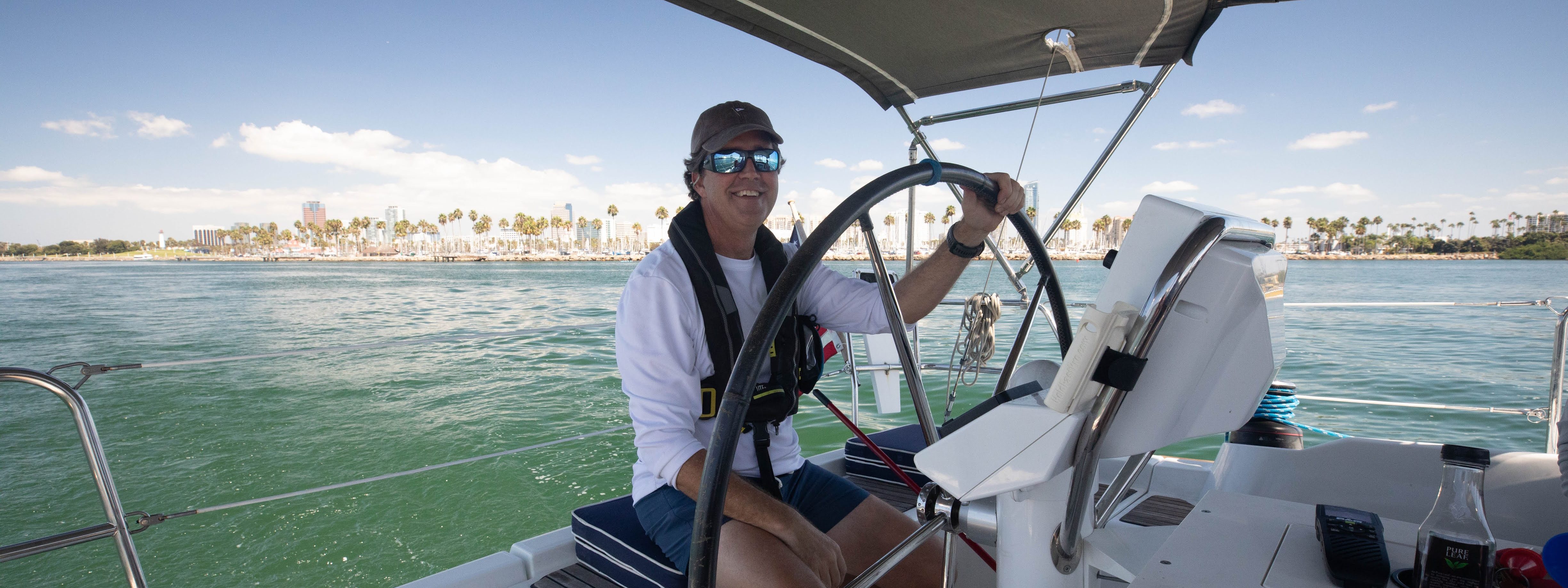
When you’ve been sailing for over 23 years, you have opinions. Some of the most important opinions that I have developed are about what products to trust (and which ones not to!)
The links below are to products I know and love and above all, trust. Trust them for their reliability, durability, consistency, and/or usability.
Please note that if you buy something from a link on this page, I may receive a commission from qualifying purchases. Thank you for your support.
Inflatable PFDs
Spinlock Deckvest

The Spinlock Deckvest series of PFDs are some of the most comfortable on the market. I personally use the Deckvest Lite+
- It meets USCG standards for Type V PFDs (not all do…read carefully.)
- Water must flow up into a chamber to activate. It can’t be activated by spray or an accidental water bottle spill.
- The manual inflate is not a hanging tab. It is a carefully recessed loop of strap with a dayglow green rubber cover.
- It has the crotch strap to keep it from riding up after inflation.
- It is SUPER comfortable to wear all day.
- They have some nice accessories like the carrying pouch seen here.
In addition to this, the Deckvest VITO is another great version with a few more features
Lume-On Lights

While these are produced by Spinlock they will work on ANY inflatable PFD. Inflate your PFD and peel and stick these to the back of each side. When you fall in the water and these get wet, they light up illuminating your entire PFD like a flashlight does when you put it against a gallon jug of water.
These are a major (cheap) upgrade to your PFD!
Rigging Knife
This simple rigging knife has been the best one I’ve owned. It hasn’t rusted, stayed sharp, and has a good knife, marlinspike, and a shackle tool. I added a wrist strap out of paracord and so I don’t lose it when I’m using it. I keep in either in my PFD when I’m on the boat, in my checked baggage otherwise!

Clothing
I’ve got a friend who says “there’s no such thing as bad weather, just inadequate equipment.” Now, I don’t necessarily buy into that 100%, but here is my approach to sailing clothing. Full Metal Jacket – this is the heaviest stuff I have. Primarily for the PNW and proper winter in SoCal. This is paired with some fuzzy layers of choice underneath as appropriate for the temp. Rain Gear – This is generally what I bring to SoCal for fall and spring (and a summer day with rain). This probably gets put on over shorts and a long sleeve UPF shirt. Summer Fun – Summer in SoCal or anywhere warm. Any season, this may be what I’m wearing underneath whatever foulies you see.
Full Metal Jacket

I have the “Offshore” set of bibs and jacket for when it’s cold out and when the rain could be more than I had hoped for. I currently have the Gill OS2 Offshore Bib and Jacket.
For footwear I have a pair of the Short Cruising Boots from Gill as well as a couple of pairs of their wool socks.
Not sure what I was talking about here. This was the coldest day we had sailing out of Sydney, Vancouver Island, Canada. Probably saying something about being cold.
Rain Gear

Helly Hansen has come on strong in the last few years and it shows. I have midweight rain gear from them. Their Crew Hooded Jacket (seen wearing it here) is as good for the sailboat as it is the yacht club after racing. I also have a pair of waterproof rain pants from Helly as well.

Base Layer / Summer Fun
My base layer usually involves some sort of sailing shorts with extra durable material on the parts that rub on the boat, and some long sleeve UPF shirt I got at a regatta. A lot of this gear came from Gill Marine.

This is the OS3 Coastal Waterproof Sailing Short. Mine are a few year’s older than this model, but it seems to be the current version. Plenty of pockets, a few of which are secured with zippers or velcro, is nice along with a soft feel on the skin make these my go to.
In that photo, I’m pretty sure that’s a shirt I got at some regatta, but Gill also has a variety of UPF shirts, both long and short sleeve that I have seen hold up pretty well over the years. I have noticed if you can machine wash, but let them dry on the hangar, not put them in the dryer, they seem to last longer.
Marine VHF
I’ve owned a few different brands of Marine VHFs over the years. I’ve had to because others have failed. Fortunately not in an emergency. My overall pick for brand is ICOM. I’m also a Ham Radio Operator and they have some of the best equipment in that realm as well.

The VHF I have now is not in production anymore (yes, it’s lasted that long!) but for the casual user, some of the most important features are battery life, water resistance, power, and how it charges. Enter the ICOM M25EVO handheld VHF. With 14 hrs (advertised) of battery life, USB-C charging, and waterproof to 3 feet, it is a great place to start.
For users that are more demanding, the other major features start to become GPS, Digital Selective Calling (DSC), and even AIS. Their flagship in this category is the ICOM M94D with DSC, GPS, and AIS built in.
For this to work properly you will need to get an MMSI number from one of the providers. This is a free service, but think of your MMSI as your radio’s phone number. You register your name, vessel, and other personal information so when you press the guarded “Distress” button, the USCG (if they hear you) can look up more information about you.

